
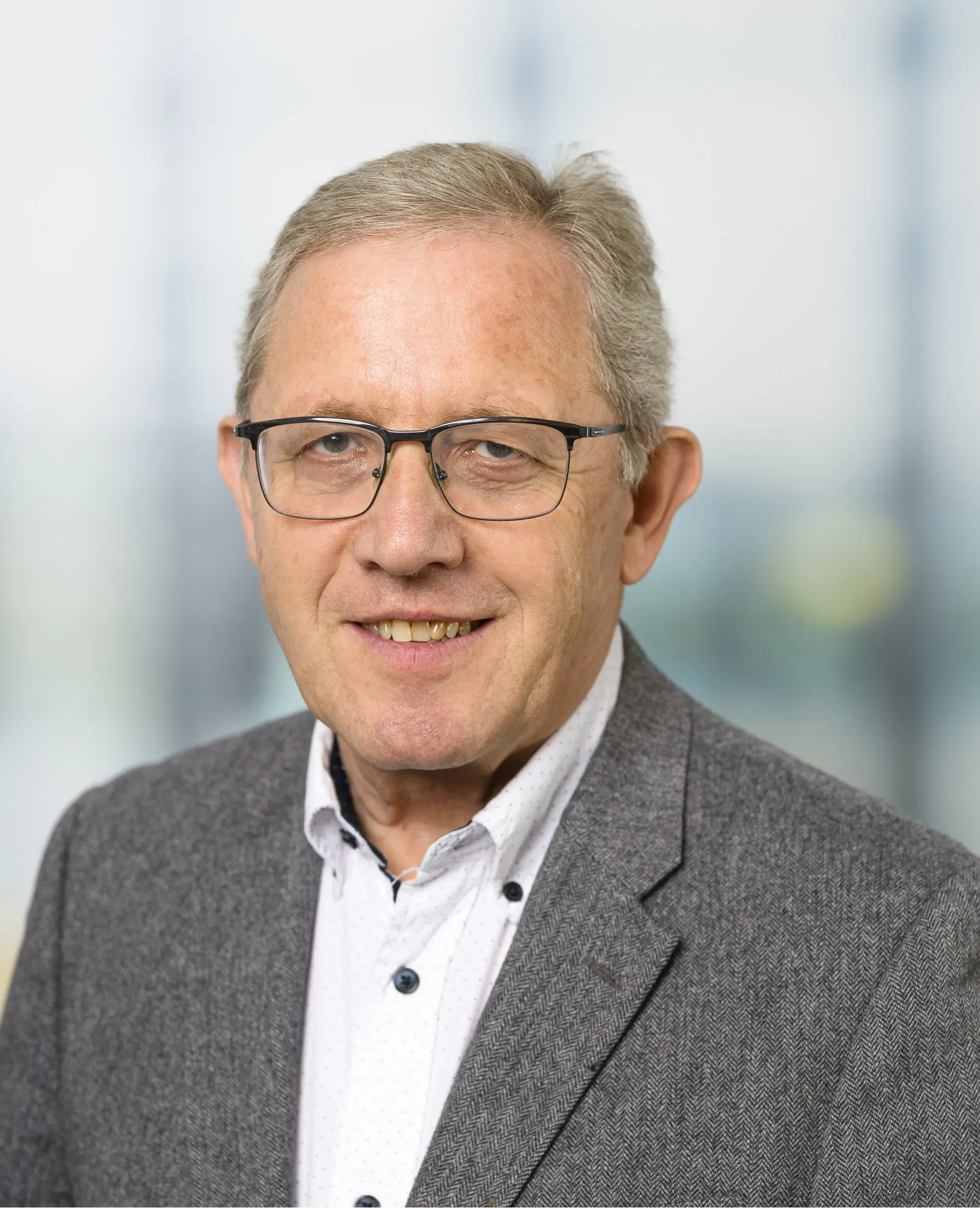
 Pavol Bauer is currently a full Professor with the Department of Electrical Sustainable Energy of Delft University of Technology and head of DC Systems, Energy Conversion and Storage group. He received Masters in Electrical Engineering at the Technical University of Kosice (‘85), Ph.D. from Delft University of Technology (’95) and title prof. from the president of Czech Republic at the Brno University of Technology (2008) and Delft University of Technology (2016). He is also honorary professor at Politehnica University Timisioira in Romania where he got also a honorary doctorate (Dr.h.c). From 2002 to 2003 he was working partially at KEMA (DNV GL, Arnhem) on different projects related to power electronics applications in power systems. He published over 200 journal and over 500 conference papers in his field (with H factor Google scholar 71, Web of Science 50), he is an author or co-author of 8 books, holds 16 international patents and organized several tutorials at the international conferences. He has worked on many projects for industry concerning wind and wave energy, power electronic applications for power systems such as Smarttrafo; HVDC systems, projects for smart cities such as PV charging of electric vehicles, PV and storage integration, contactless charging; and he participated in several Leonardo da Vinci, H2020 and Electric Mobility Europe EU projects as project partner (ELINA, INETELE, E-Pragmatic, Micact, Trolly 2.0, OSCD, P2P, Progressus, Tulip, Flow) and coordinator (PEMCWebLab.com-Edipe, SustEner, Eranet DCMICRO). His main research interest is power electronics for charging of electric vehicles and DC grids. He is a Senior Member of the IEEE (’97), former chairman of Benelux IEEE Joint Industry Applications Society, Power Electronics and Power Engineering Society chapter, chairman of the Power Electronics and Motion Control (PEMC) council, chairman of Benelux IEEE Industrial Electronics chapter, member of the Executive Committee of European Power Electronics Association (EPE) and also member of international steering committee at numerous conferences.
Presentation Title: Energy Hubs as the basic building blocks of the future energy system.
Presentation Abstract: The accelerating electrification of society, large-scale integration of renewable energy sources, and increasing grid congestion demand a fundamental rethinking of how energy systems are designed and operated. This presentation introduces Energy Hubs as the basic building blocks of the future energy system, enabling a resilient, efficient, and flexible energy transition. Energy hubs are highly self-sufficient, power-electronics-dominated microgrids that integrate multiple energy carriers—electricity, hydrogen, heat, and mobility—while operating reliably under weak-grid and highly dynamic conditions.
Building on research conducted at Delft University of Technology, the talk presents the digital energy concept based on energy cells, energy packets, virtualization, and energy communities. The focus is on DC microgrids and multiport power electronic architectures that allow coordinated generation, conversion, storage, and consumption of energy. Key technical challenges are addressed, including energy hub sizing and layout, grid-forming and grid-following control, power quality, stability under low short-circuit ratios, and advanced energy management systems, including AI-based approaches. The presentation showcases concrete application domains—offshore wind integration, railways, airports, heavy-duty electric vehicle charging, green hydrogen production, industry electrification, and urban energy systems—supported by experimental validation through hardware-in-the-loop platforms and medium-voltage demonstrators. The results demonstrate how modular, scalable energy hubs can alleviate grid congestion, increase renewable energy utilization, improve system resilience, and form the backbone of a decentralized, digitally enabled future energy infrastructure.